Articles — July 26, 2026
Experiencing Alvar Aalto’s Heritage from the Inside Out
Finland offers architecture and design enthusiasts a rare opportunity: not only to admire world-famous modernist buildings, but to stay in them. Here, architecture is not confined to museums or guided tours—it remains a living part of everyday life. For travelers interested in culture, design, and heritage, Finland provides immersive experiences that allow visitors to sleep, work, and reflect within some of the most significant works created by Alvar Aalto and his collaborators Aino and Elissa Aalto.
This experience has become even more compelling following UNESCO’s decision to include Aalto Works, a collection of 13 buildings designed by Alvar, Aino, and Elissa Aalto, on its World Heritage List. The ensemble includes renowned landmarks such as Finlandia Hall, Säynätsalo Town Hall, Paimio Sanatorium, Villa Mairea, the House of Culture, and the Aalto University campus in Jyväskylä. With this recognition, Finland now has eight UNESCO World Heritage properties, reaffirming the global significance of Finnish modern architecture.
Architecture Designed for Human Experience
To understand why staying in an Aalto building is so memorable, one must understand the philosophy behind Finnish modernism. Alvar, Aino, and Elissa Aalto believed that architecture should be designed around human needs and emotions. Buildings were conceived as complete works of art, where landscape, architecture, furniture, lighting, materials, and even door handles formed a harmonious whole.
Rather than creating monuments to be admired from afar, the Aaltos designed spaces meant to be lived in. Natural light, tactile materials, and carefully considered proportions create environments that promote well-being and comfort. Today, travelers can experience these ideas firsthand by spending the night in carefully restored Aalto properties.
Finlandia Hall: A Modernist Icon Reimagined
Standing on the shores of Helsinki’s Töölönlahti Bay, Finlandia Hall is one of Alvar Aalto’s most celebrated masterpieces. Clad in white Carrara marble and completed in the 1970s, the building has long served as one of Finland’s premier venues for culture, music, and international events.
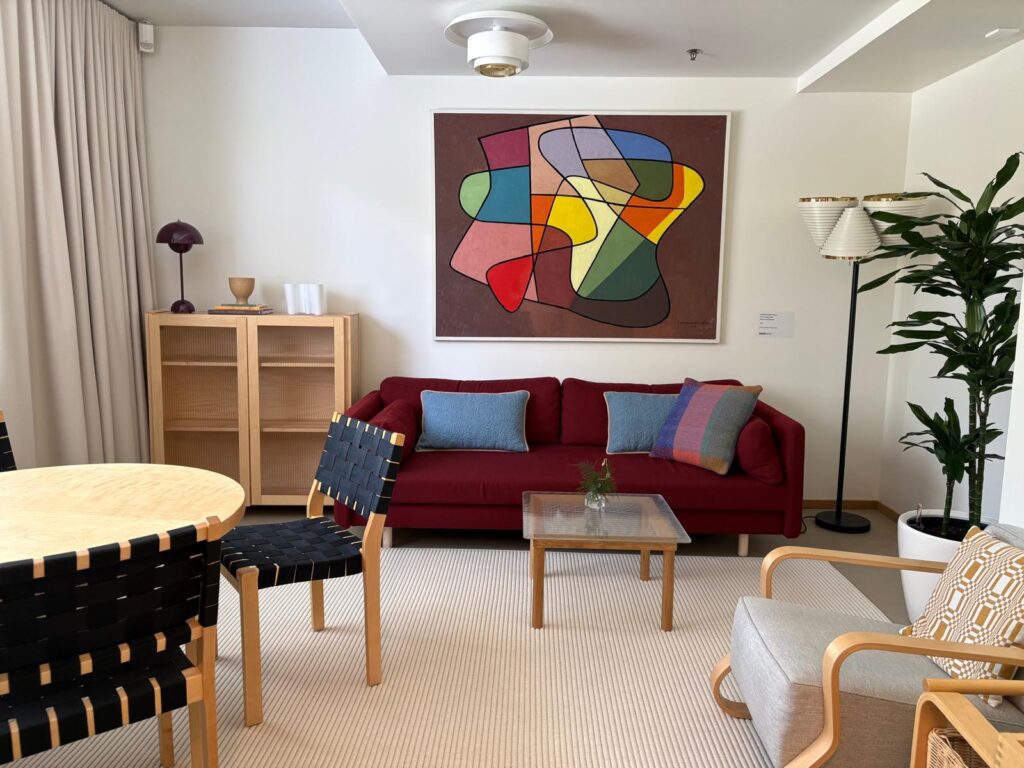
Following an extensive restoration project, Finlandia Hall has entered a new chapter through Finlandia Homes, a collection of stylish apartments located within the building itself. Originally intended as residential quarters for staff, these spaces have been transformed into unique accommodation where guests can experience life inside one of the world’s great modernist landmarks.
Among the apartments is the vibrant Elissa Suite, named after Elissa Aalto, who played a crucial role in completing numerous projects after Alvar Aalto’s death. Furnished with restored mid-century pieces and contemporary artworks, the apartments successfully combine historical authenticity with modern comfort.
Staying at Finlandia Homes offers more than accommodation. Guests wake up inside an architectural monument while enjoying immediate access to Helsinki’s cultural heart, including Oodi Central Library, the Helsinki Music Centre, Kiasma Museum of Contemporary Art, and the city’s vibrant waterfront.
Säynätsalo Town Hall: A Masterpiece of Human-Scale Design
If Finlandia Hall represents Aalto’s grand urban vision, Säynätsalo Town Hall embodies his more intimate and organic architectural language. Completed in 1952 on an island near Jyväskylä, the complex is widely regarded as one of the most influential buildings of twentieth-century architecture.
Constructed from dark red brick and organized around a raised courtyard, the building combines civic functions with extraordinary warmth and humanity. Every detail—from the brickwork and timber structures to the custom-designed fittings—reflects Aalto’s holistic approach to architecture.
Today, the building welcomes overnight guests through accommodations managed by Tavolo Bianco. Visitors can stay in the original guest rooms once used during the building’s construction or choose larger apartments designed for longer stays.
What makes Säynätsalo exceptional is its atmosphere. When daytime visitors leave, guests can enjoy the courtyard and historic spaces in near silence, experiencing the building much as Aalto intended. The surrounding lake landscape further enhances this feeling, creating a uniquely Finnish combination of architecture and nature.
The location also serves as an ideal base for exploring other Aalto destinations, including the nearby Muuratsalo Experimental House and the Aalto2 Museum Centre in Jyväskylä.
Paimio Sanatorium: From Healthcare Landmark to Wellness Destination
Another UNESCO-recognized Aalto building entering a new phase is Paimio Sanatorium. Originally designed in the 1930s as a tuberculosis hospital, the building remains one of the most important examples of architecture created to support human well-being.
To secure its future, plans are underway to transform the sanatorium into a wellness-focused hotel and conference destination. The project, designed by the Norwegian architectural firm Snøhetta together with Finnish partners, seeks to preserve the building’s architectural integrity while giving it a sustainable economic future.
The development is expected to include approximately 120 hotel rooms, modern conference facilities, and wellness services. Rather than becoming a static museum, Paimio will continue to evolve as a living destination that attracts international visitors interested in architecture, culture, design, and Nordic well-being.
This transformation reflects a wider philosophy in Finland: historic buildings are preserved not by freezing them in time, but by finding meaningful contemporary uses that keep them relevant for future generations.
Following the Alvar Aalto Route
Travelers wishing to explore Aalto’s legacy in greater depth can follow the Alvar Aalto Route, an official Cultural Route of the Council of Europe. The route connects dozens of Aalto sites across Finland and Europe, offering visitors a structured way to discover the architect’s work and its enduring influence.
The route links urban landmarks, cultural institutions, private residences, churches, educational campuses, and experimental design projects, creating one of Europe’s most compelling architecture-based travel experiences.
A New Way of Experiencing Design
Finland demonstrates that architecture can be more than something to observe—it can be something to inhabit. Whether sleeping inside Finlandia Hall, watching evening light move across the red-brick courtyard of Säynätsalo, or anticipating the future opening of Paimio’s wellness hotel, visitors become participants in design history rather than spectators.
The recent UNESCO recognition of Aalto Works further strengthens Finland’s position as one of the world’s most important destinations for architecture tourism. More importantly, it highlights a uniquely Finnish belief: great architecture should remain alive, accessible, and connected to everyday life.
For travelers seeking meaningful cultural experiences, Finland offers a rare invitation—to step inside a masterpiece and truly live within it.
Further information:
Finlandia Hall: https://www.finlandiatalo.fi/en/
Tavolo Bianco (Säynätsalo Town Hall): https://tavolobianco.com/
Aalto2 Museum: https://aalto2.museum/en/aalto-work-and-life/
Alvar Aalto Route: https://visit.alvaraalto.fi/en/